
Did you know that 87% of hiring managers in the fashion industry decide within the first three minutes of seeing a candidate’s work? Your creative projects are your main way to stand out in this tough field.
A well-made collection of your best work is like your visual resume. It shows your creative ideas, technical skills, and how ready you are for the industry. This special collection makes you different from others looking for jobs, internships, or spots in top programs.
Your work is more than just sketches and clothes. It shares your unique story as a new creator and grows with your skills.
Creating this key tool needs careful planning and choosing the right pieces. Schools like NIF Global Siliguri (+91 98326 40060, nifsiliguri@gmail.com) help students make their professional presentations better.
This guide will show you how to make a strong portfolio. It’s a way to open doors in your career.
Key Takeaways
- Your visual presentation is your main tool for getting career chances in the competitive industry
- Industry pros judge candidates in three minutes of looking at their work
- A strong showcase shows your creative vision, technical skills, and professional readiness at the same time
- Your collection should tell a story, not show every project you’ve done
- Planning and getting professional advice make your visual presentation better
- Your work grows as a living document through your education and career
Understanding the Purpose of Your Portfolio
Your portfolio is more than just a collection of your work. It’s a key tool for advancing your career. It shows who you are as a designer and what you stand for creatively.
Effective portfolios do more than one thing. They show your technical skills and your creative thinking. They also highlight your finished work and hint at your future potential.
Before picking which pieces to include, know what you want your portfolio to do. Are you aiming for a top design program or an internship at a famous fashion house? Each goal needs a different approach to building your portfolio.
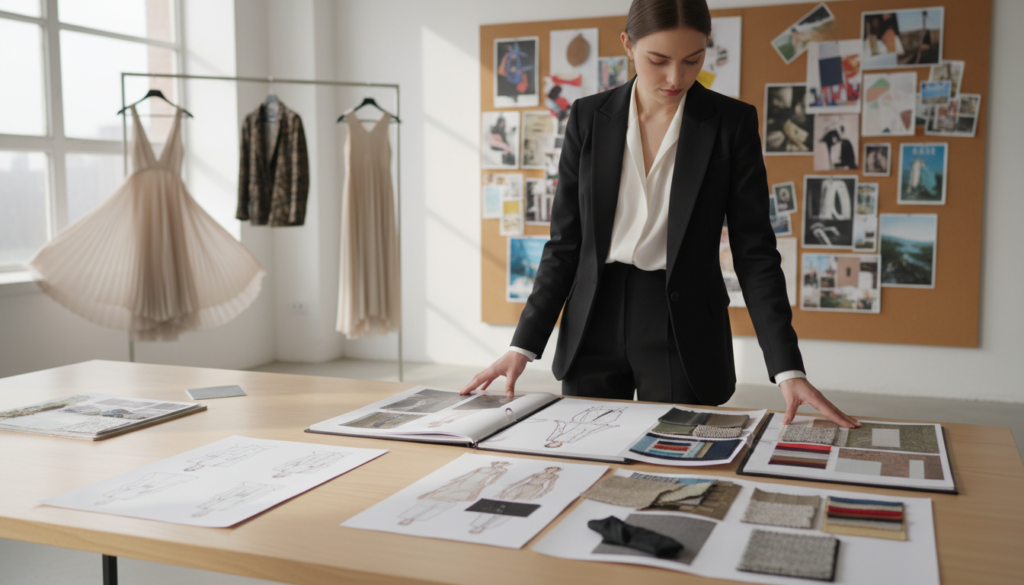
“A portfolio is not just about showing what you’ve done; it’s about showing who you are as a designer and where you’re going.”
Defining Your Unique Design Aesthetic
Your design aesthetic is what makes your work unique. It’s what sets you apart from others. Finding this aesthetic requires looking at your work closely.
Start by organizing your projects and looking for patterns. Do certain colors or styles keep appearing? These patterns show your design preferences and creativity.
Maybe you focus on sustainability or combining old and new techniques. Or perhaps you challenge traditional ideas through your designs. Documenting these themes helps you share your creative vision.
Write down the ideas and emotions you want to share through your designs. This statement is key when explaining your work to others.
Let your aesthetic guide your portfolio choices. Not every project is right for your portfolio. Choose pieces that best show your aesthetic, even if they’re not the most technically skilled.
Showcasing Your Skill Set
Your portfolio should show both your technical skills and your strengths. Fashion design involves many skills, and employers want to see you have them all. But also show where you excel.
Include projects that highlight different skills. Show your pattern-making skills with flat patterns and draping. Display your illustration skills with sketches that capture movement and fabric.
Textile manipulation is also important. Document projects where you’ve worked with fabric dyeing, printing, or embellishment. These details show you understand fashion beyond sketching pretty designs.
Garment construction quality is key. Include close-up photos of your work’s details. These images show your craftsmanship and understanding of industry standards.
For students looking to improve these skills, places like NIF Global Siliguri offer help. They provide resources and mentorship for portfolio development. You can reach them at +91 98326 40060 or nifsiliguri@gmail.com for more information.
| Skill Category | Portfolio Evidence | Why It Matters | Presentation Method |
|---|---|---|---|
| Technical Drawing | Flat sketches, technical specifications | Shows communication with production teams | Multi-view illustrations with measurements |
| Creative Illustration | Fashion figures, mood boards, concept art | Demonstrates artistic vision and inspiration | Styled presentation with design narrative |
| Construction Skills | Finished garments, detail photography | Proves ability to execute designs physically | Professional photos showing interior and exterior |
| Digital Proficiency | CAD designs, digital prints, 3D renderings | Reflects current industry technology standards | Screen captures and digital mockups |
Tailoring Your Portfolio to Your Audience
Creating a single portfolio for all purposes is a common mistake. The most effective portfolios are audience-specific. What impresses a university is different from what impresses a streetwear brand.
Research your target audience before finalizing your portfolio. If applying to design schools, look at their philosophies and recent graduate work. Schools value experimental thinking and conceptual development.
For internship applications at established fashion houses, focus on work that matches the brand’s aesthetic. Study their recent collections and understand their target market. Select pieces that show you could contribute to their design direction.
Startup brands and emerging labels seek versatility and practical skills. They want designers who can handle multiple roles. Include projects that show your problem-solving abilities and understanding of the design-to-market process.
Freelance opportunities require portfolios that demonstrate reliability and diverse capabilities. Potential clients want confidence in your ability to deliver quality work across different project types. Include a range of styles while maintaining overall coherence that reflects your professional standards.
Consider creating a master portfolio with all your best work. Then, make customized versions for specific opportunities. This way, you can strategically reorder, emphasize, or exclude pieces based on what each audience values most. Digital portfolios make customization easier than maintaining multiple physical books.
Essential Components of a Strong Portfolio
A great portfolio can make a big difference in your career. It’s not just about the designs. You need to pick the right projects, present them well, and tell a story that grabs attention.
These steps turn your portfolio into a powerful tool. It shows your talent, professionalism, and knowledge of the industry. Students who get this right stand out from their peers.
Including a Diverse Range of Projects
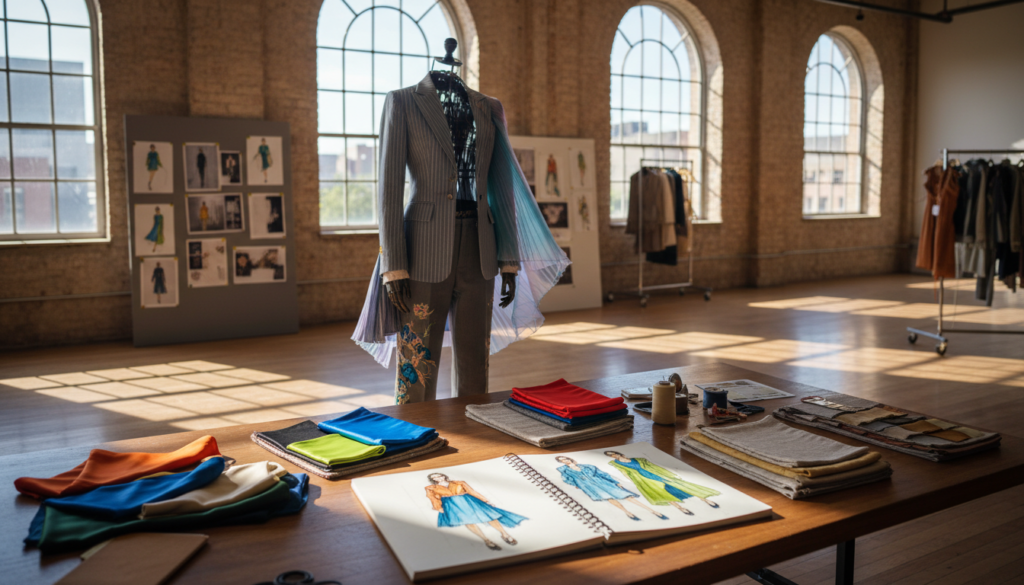
Your portfolio should have 10 to 20 of your strongest pieces. Quality is more important than quantity. This way, each piece gets the focus it deserves.
Showing different types of projects shows you’re versatile. Include various types of work to highlight your skills. This proves you can handle different challenges while staying true to your style.
Consider adding these types of projects for balance:
- Complete fashion collections with coordinated pieces
- Individual statement garments that showcase technical skills
- Initial sketches and concept development work
- Mood boards that reveal your inspiration process
- Fabric swatches and material explorations
- Technical flats and construction details
- Collaborative projects or client work
The key is to keep a consistent style throughout. Your portfolio should feel like it’s from one designer, not a mix of many. Viewers should see your unique perspective in every piece.
Balance creative work with practical designs. Show off your innovative side while also understanding what sells. This shows you’re both creative and industry-aware.
“A portfolio should tell a story about who you are as a designer, not just show what you can make.”
Don’t repeat yourself too much. If you have three similar dresses, pick the best one. Too many similar pieces can make your portfolio look limited.
Utilizing High-Quality Images
Professional photos make your designs look top-notch. For fashion students, this is crucial. Bad photos can ruin even the best designs.
Investing in pro photos can really boost your portfolio. They know how to make your clothes look amazing. If you can, spend on your best pieces.
But, there are good alternatives for those on a tight budget:
- Use natural daylight near large windows for even, flattering illumination
- Create simple, clean backgrounds with white or neutral-colored fabric
- Learn basic photography techniques through free online tutorials
- Utilize free editing software like GIMP or Canva for post-processing
- Borrow or rent quality camera equipment from your institution
Keep your images looking professional by being consistent. Use the same lighting, backgrounds, and editing style for all your photos. This makes your portfolio look put together.
Image quality is about more than just the photo. Make sure clothes are pressed, fit well, and are accessorized right. These details show you care about the little things.
| Photography Element | Professional Option | Budget-Friendly Alternative | Key Consideration |
|---|---|---|---|
| Lighting | Studio lighting setup with softboxes | Natural window light during golden hour | Avoid harsh shadows and overexposure |
| Background | Professional seamless paper backdrops | White walls or draped neutral fabric | Keep backgrounds simple and non-distracting |
| Equipment | DSLR camera with quality lenses | Smartphone with portrait mode | Ensure high resolution for printing |
| Editing | Adobe Photoshop or Lightroom | GIMP, Snapseed, or Canva | Maintain color accuracy and natural look |
Include different angles and details to show off your work. Full shots and close-ups of details, textures, and embellishments are key. This gives a full view of your skills.
Writing Compelling Descriptions
Descriptions add depth to your images. They should enhance visual understanding without being too much. Good writing shows you can communicate well, a skill valued in fashion.
Start each description with your design concept and what inspired you. This helps reviewers understand your choices.
Identify who your design is for. Knowing your target audience shows you’re market-aware. This is a sign of professional maturity.
Be specific about materials and how you made things. Instead of saying “silk fabric,” say “silk charmeuse.” This shows you know your stuff.
Explain how you made things. Talk about special techniques or methods. This shows your skills, even if photos can’t fully capture them.
Keep your descriptions short, between 50 to 150 words. This forces you to focus on the most important info. Reviewers don’t have much time, so be concise.
Avoid jargon that’s hard to understand. While knowing industry terms is good, clarity is more important. Write in a way that’s easy for everyone to get.
These three things—diverse projects, great photos, and clear descriptions—work together to make a strong portfolio. Each part strengthens the others, creating a cohesive presentation. When you focus on these basics, you can stand out in a competitive field.
Tips for Presenting and Promoting Your Portfolio
Your portfolio’s presentation can make a big difference. It can help you land your dream job or get overlooked. The key is to choose the right format and make sure it’s seen by many.
Choosing the Right Format
Digital portfolios are great because they can reach more people. You can share them on personal websites, Behance, or Coroflot. They’re easy to update and everyone can see them.
But, physical portfolios are still important for face-to-face meetings. Use high-quality prints and professional binding. Make sure both your digital and physical portfolios look the same and have the same content.
Building Connections and Getting Feedback
Go to fashion shows, portfolio reviews, and industry conferences. These are great ways to meet people in your field. Schools like NIF Global Siliguri (nifsiliguri@gmail.com, +91 98326 40060) offer portfolio review sessions.
These sessions are a chance to get feedback from experts. Use this feedback to improve your work. Always be open to suggestions and make changes that make your portfolio stronger.
Growing Your Reach Through Digital Platforms
Instagram, Pinterest, and LinkedIn are great for showing off your designs. Post regularly and find the right hashtags for your work. It’s also important to interact with other designers and brands.
Quality is more important than quantity. These tips can help turn online followers into real job opportunities. Your strategy needs constant effort and real engagement to succeed.