
Did you know that 90% of fashion students can’t explain the difference between these two careers? This lack of understanding affects many students each year. They struggle to choose the right path for their education.
Fashion vs textile design are two different paths in the creative world. Fashion designers create clothes you see in stores. Textile designers, on the other hand, make the fabrics for those clothes.
This guide helps you understand the creative fields comparison. You’ll learn about the skills, tasks, and outcomes of each career. This knowledge is key to making the right choice for your future.
If you’re a student, thinking of a career change, or just curious, you’re in the right place. Knowing the difference between these careers helps you make better choices. It ensures you’re on the right path in your education and career.
Key Takeaways
- These two professions have different career paths, skills, and daily tasks.
- Fashion designers create clothes for people to wear.
- Textile designers make fabrics, patterns, and treatments for various uses.
- Both work together to make the products you see in stores.
- Your education and career options are different for each field.
- Knowing the difference helps you make better choices for your future.
Defining Fashion Design
Fashion design is a mix of art and science. It turns creative ideas into real clothes. This field involves every step from the first sketch to the final product in stores.
Designers must think creatively and practically. They balance their ideas with what the market wants and what can be made. Understanding this balance is key to success in the fashion world.
The Creative Process Behind Clothing Design
Fashion design is a journey from idea to reality. It starts with researching trends and what people like. This includes trend forecasting to guess what styles will be popular.
Designers get inspiration from many places like art and nature. They then draw their ideas. Fashion illustration is how they share their vision with others.
Choosing the right materials is next. Designers need to know about fabrics and how they work. This choice affects how the clothes look and feel.
Garment construction is the next step. Here, designs become real clothes. Designers work with others to make sure the clothes fit right and look good.
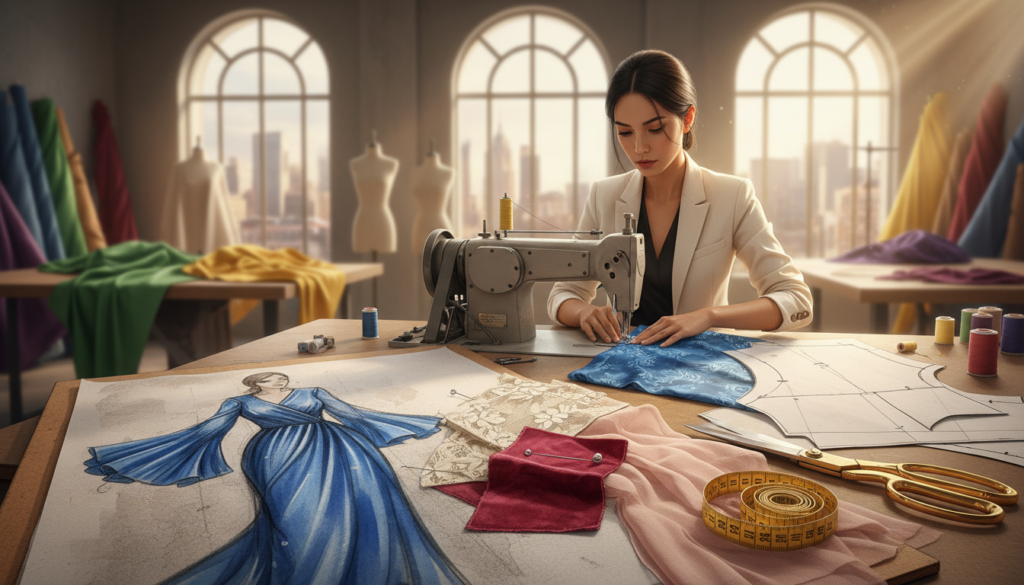
Core Components Every Designer Masters
Successful designers know a few key things. Silhouette is the shape of a garment. Designers learn to make shapes that look good on different bodies.
Color theory is also important. Designers must know how colors work together. They use this to make their designs pop.
Texture adds depth to designs. Designers mix different textures to make clothes interesting. This can make a simple design stand out.
Proportion and balance are crucial. Designers make sure their designs look good and fit right. Trend forecasting helps them stay on track.
Designs must also be practical. They need to appeal to people and be affordable to make. Knowing about costs and prices is key for a successful fashion career.
Essential Abilities for Success
To succeed in fashion, you need both technical skills and creativity. Designers must be good at drawing, making patterns, and sewing. They also need to understand business.
Technical skills are the foundation. Designers need to be able to sketch and fashion illustrate. They also need to know how to make patterns and work with fabric.
Sewing skills are important, even if you don’t sew everything. Knowing how to make clothes helps you design better. Designers also use computer software to make designs.
Good communication is key. Designers work with many people. They need to understand business to make money. They also need to manage their time well.
Knowing about trends and what people like is important. Designers need to stay up-to-date. This helps them make designs that people want to wear.
| Skill Category | Specific Abilities | Application in Design | Development Method |
|---|---|---|---|
| Creative Skills | Sketching, fashion illustration, color selection, concept development | Visualizing designs and communicating artistic vision to stakeholders | Art classes, daily practice, portfolio building, mood board creation |
| Technical Skills | Pattern making, draping, sewing, garment construction, CAD software | Translating designs into producible garments with proper fit and structure | Fashion school courses, workshops, hands-on practice, internships |
| Business Skills | Trend forecasting, market analysis, cost calculation, brand development | Creating commercially viable collections that meet market demands | Business courses, industry mentorship, market research, brand studies |
| Interpersonal Skills | Communication, teamwork, presentation, networking, negotiation | Collaborating with production teams, buyers, and marketing departments | Group projects, industry events, client presentations, professional networking |
Fashion design is always changing. Designers must keep learning. They need to be open to new ideas but also respect tradition.
Starting a fashion career is challenging. It takes long hours and criticism. But seeing your designs worn is rewarding.
Exploring Textile Design
Textile design is a unique field that focuses on creating patterns, textures, and materials. It’s not about making clothes but about making the fabrics that clothes are made of. Textile designers work behind the scenes to create the materials that fashion designers turn into beautiful clothes and home items.
Textile designers mix creativity with science. They think about the type of fibers, how to make the fabric, and what it will be used for. This way, they bring their artistic ideas to life.
What is Textile Design?
Textile design is about making fabrics through different methods that change color, pattern, texture, and structure. It’s a mix of art and science. Textile designers focus on fabric development and making new materials, unlike fashion designers who create whole garments.
As a textile designer, you need to know about fibers, yarns, and how fabric is made. This knowledge helps you create fabrics that look good and work well.
The field includes surface pattern design and making the fabric itself. Surface designers add patterns to fabrics, while structural designers change the fabric’s structure to get unique textures and properties.

Techniques Used in Textile Design
Textile design uses old and new techniques. Old methods like screen printing and hand weaving are still used today. They add special touches to fabrics.
New textile innovation brings digital printing and computer tools. These tools help make detailed patterns quickly and accurately.
Creating fabric involves several steps. You start with colors, patterns, and sizes. Then, you make samples before the final product is made.
| Technique Category | Traditional Methods | Modern Innovations | Primary Applications |
|---|---|---|---|
| Surface Printing | Screen printing, block printing, batik, tie-dye | Digital textile printing, sublimation printing, heat transfer | Fashion fabrics, home textiles, decorative materials |
| Fabric Construction | Hand weaving, hand knitting, traditional looms | Jacquard weaving, computerized knitting, 3D knitting | Apparel fabrics, technical textiles, performance wear |
| Surface Embellishment | Hand embroidery, beading, appliqué, quilting | Laser cutting, digital embroidery, ultrasonic bonding | Luxury fashion, bridal wear, specialty textiles |
| Dyeing Processes | Natural dyes, vat dyeing, resist dyeing | Digital color matching, eco-dyeing technologies, waterless dyeing | All textile categories, sustainable fashion |
Good textile designers know both art and science. They understand colors, patterns, and how to make fabrics. They also know about the science behind dyes and fibers.
Surface pattern design needs careful planning. You must think about how patterns repeat and how colors work together. Your designs need to look good on paper and in real life.
Importance of Fabric in Fashion
Fabric choice is key in fashion. It affects how clothes look and feel. The right fabric makes your design shine, while the wrong one can ruin it.
Fabric’s weight, stretch, and breathability change how clothes are made. They decide if a fabric is for a flowing dress or a tight fit. These qualities also show the style and quality of your clothes.
Fashion is architecture: it is a matter of proportions, but the foundation is always the fabric.
New fabrics drive fashion forward. They let designers make clothes they couldn’t before. Moisture-wicking fabrics changed activewear, and stretch denim changed jeans. Smart fabrics are opening new design doors.
Textile designers are the backbone of fashion. They create the materials that fashion designers turn into clothes. This teamwork makes fashion more creative and textile innovative.
Knowing about fabrics helps you make better designs. You choose fabrics like silk for elegance, wool for structure, or knits for sports. This choice depends on your design goals and who you’re making it for.
The Relationship Between Fashion and Textile Design
Fashion and textile design work together to create clothes and accessories. Understanding their connection helps you see the fashion industry’s bigger picture.
How They Complement Each Other
Design collaboration is common in the fashion world. Textile designers make fabrics with special qualities. Fashion designers then turn these materials into clothes.
Big fashion houses have both textile and fashion designers working together. Textile designers might make custom prints for a fashion designer’s idea. Fashion designers then use their sketches to show off the fabric’s unique qualities. This teamwork leads to memorable collections.
Career Opportunities in Fashion and Textile Design
There are many career paths in both fields. Fashion designers can be creative directors, costume designers, or personal stylists. Textile designers can be print specialists, fabric technologists, or color experts.
Jobs are found in big companies or small studios. Freelance work is also available. The demand for new talent keeps growing.
NIF Global Siliguri offers top-notch fashion education in both areas. For more information, call +91 98326 40060 or email nifsiliguri@gmail.com.
Choosing the Right Path for You
Think about what you like to do. Do you enjoy designing clothes or making fabrics? Your preferences will help you choose the right path.
Technical skills are often needed in textile design. Creative thinking is key in fashion design. Many people develop skills in both areas, making them valuable in the industry.