
Did you know that the Indian apparel market is projected to reach $190 billion by 2025? This growth opens up new chances for creative minds. It’s a big change for those looking to start or grow their careers in this field.
Knowing how much you can earn is key when planning your career. The creative world offers different pay levels. This depends on your area of focus and how much experience you have.
There are many areas to work in, like high-end fashion, everyday clothes, textile design, accessories, and costumes for movies and TV. Each one has its own unique income ranges and chances for moving up.
As you move from beginner to more senior roles, your pay can really grow. This guide will help you understand the money side of your job. It will also show you career growth opportunities that match your skills and goals.
Key Takeaways
- Entry-level jobs usually pay between ₹2-4 lakhs a year. More experienced people can earn ₹8-15 lakhs or more.
- Jobs in high-end fashion or movie costumes often pay more.
- Cities like Mumbai, Delhi, and Bangalore usually offer better pay than smaller places.
- Having a degree from a well-known school can help you earn more at the start.
- Freelancers can make more money as they get more clients and build their reputation.
- The industry has grown 8-10% every year for the last decade. This means more job options.
Understanding the Salary Range for Fashion Designers in India
Thinking about a career in fashion design? It’s important to know about the money side. The fashion designer salary India market varies based on your experience, education, and where you work. This section explains what you might earn at different stages of your career.
As you get more experience, your salary can grow a lot. The fashion world values creativity, technical skills, and business smarts. It pays well for these qualities.
What You Can Expect as Average Compensation
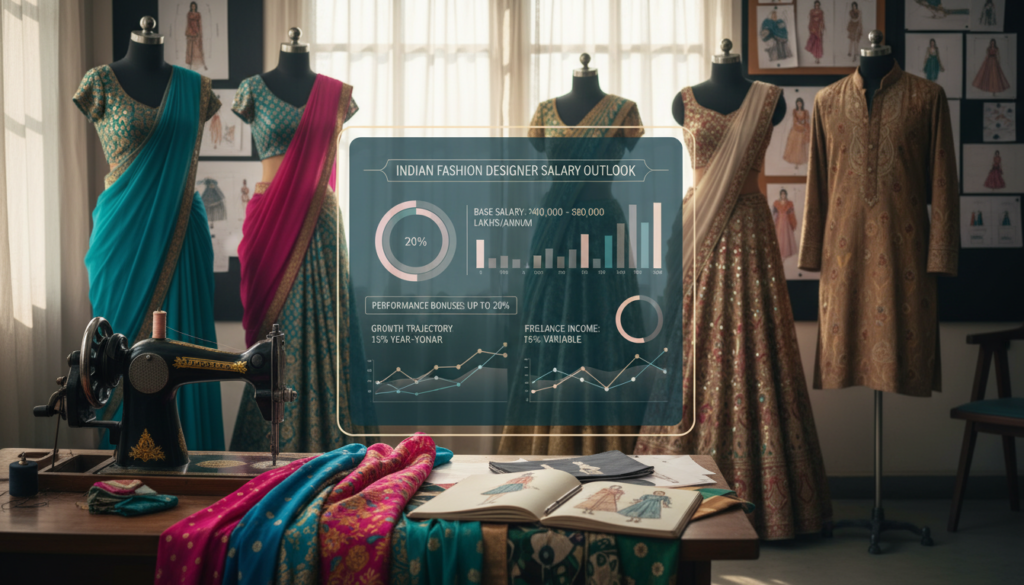
In India, the average fashion designer income is between ₹3 lakhs to ₹6 lakhs a year. This is the average for designers with some experience in big companies. But, your actual pay can change a lot based on several things.
Designers at luxury brands or big international companies usually make more than those at small shops. Your design skills and unique style also affect how much you earn.
- Established fashion houses: ₹5 lakhs to ₹8 lakhs annually
- Mid-sized design studios: ₹3.5 lakhs to ₹5.5 lakhs annually
- Small boutiques and startups: ₹2.5 lakhs to ₹4 lakhs annually
- Independent freelance designers: Income varies based on client base and project volume
Who you work for matters a lot. Big fashion companies usually offer better salaries and benefits. But, working for smaller places might mean lower pay but more freedom to be creative.
Starting Your Career: Initial Compensation
Starting out, your salary expectations should match entry-level jobs. Designers with less than two years of experience usually make between ₹2 lakhs to ₹3.5 lakhs a year. This is a good starting point as you build your career.
What school you went to can also affect how much you earn at first. Graduates from top schools like the National Institute of Fashion Technology (NIFT) or Pearl Academy might start with ₹4 lakhs or more.
Several things can help you earn more at the start:
- Exceptional portfolio work: Shows creativity and technical skill
- Internship experience: Shows you’re ready for the industry
- Specialized skills: Skills in pattern-making, draping, or digital design tools
- Award recognition: Winning design contests adds credibility
Many entry-level jobs also offer chances to learn and get advice from experienced people. These benefits are valuable for your future, even if your salary is not high at first.
Growing Your Income with Experience
As you gain more experience, your salary can grow a lot. With 5 to 10 years of experience, you can earn between ₹6 lakhs to ₹12 lakhs a year. This is when your skills and connections in the industry really pay off.
Senior designers and creative directors with over a decade of experience make even more. They can earn between ₹15 lakhs to ₹25 lakhs a year. Some top designers even make much more than that.
| Experience Level | Years in Industry | Annual Salary Range | Typical Roles |
|---|---|---|---|
| Entry-Level | 0-2 years | ₹2 lakhs – ₹3.5 lakhs | Assistant Designer, Junior Designer |
| Mid-Level | 3-5 years | ₹4 lakhs – ₹7 lakhs | Fashion Designer, Design Coordinator |
| Experienced | 6-10 years | ₹8 lakhs – ₹14 lakhs | Senior Designer, Lead Designer |
| Senior Professional | 10+ years | ₹15 lakhs – ₹30 lakhs+ | Creative Director, Design Head |
Independent designers face different money challenges. Your income can change based on how well your designs do, the season, and what people think of them. Successful independent designers can earn a lot more than those working for companies, but their income can be less stable.
To earn more, keep improving your skills and make smart career choices. Being unique and staying relevant in the industry is key to moving up and earning more salary expectations.
Factors Influencing Fashion Designer Salaries in India
Your salary as a fashion designer in India depends on many factors. These factors shape your earnings and career path. Knowing them helps you make informed choices.
Where you work, your education, and your specialization all affect your salary. These choices lead to different salaries for designers. Let’s look at each factor to help you earn more.

Where You Work Makes a Significant Difference
Your location is key to your salary. Cities like Mumbai offer higher salaries than smaller towns. Salaries can be 30% to 50% higher in big cities.
Mumbai is India’s fashion capital, with top opportunities for designers. It has major fashion weeks and luxury brands. Designers in Mumbai earn more than the national average.
Delhi NCR is the second-best market, great for bridal and traditional fashion. Bangalore and Hyderabad are growing for modern and fusion wear. But, consider the cost of living in these cities.
While metros pay more, living costs are higher. Your savings might be similar in a high-paying job in a metro or a lower-paying job in a smaller city.
Your Educational Credentials Shape Starting Salary
Your education greatly affects your starting salary. Graduates from top schools earn more than others. This can be a 20% to 40% difference.
Schools like NIFT, Pearl Academy, and Symbiosis are highly valued. They offer training, connections, and support. Employers look for graduates from these schools for their skills.
Specialized training makes you more valuable. Skills in pattern making, CAD, or textile technology are in demand. International education or certifications can double your salary.
Keep learning to stay competitive. Short courses and certifications in new areas like sustainable fashion are important. Education is a lifelong investment.
Specialization Determines Your Income Ceiling
Different areas in fashion offer different salaries and growth. Your specialization shapes your career and earnings. Knowing this helps you choose wisely.
Luxury fashion designers earn more than those in fast fashion. High-end fashion commands high prices. Clients pay for custom designs, valuing designer expertise.
Costume designers for films and TV earn from projects. A successful designer can make more from one project than a year’s salary. But, it requires connections and managing income.
| Specialization Area | Average Salary Range (Annual) | Growth Potential | Key Advantages |
|---|---|---|---|
| Luxury Fashion Design | ₹6-15 lakhs | High | Premium clients, creative freedom, international exposure |
| Costume Design (Film/TV) | ₹4-12 lakhs | Very High | Project-based bonuses, creative recognition, networking |
| Textile Design | ₹3.5-8 lakhs | Moderate | Steady demand, technical specialization, export opportunities |
| Fashion Merchandising | ₹4-10 lakhs | High | Business skills, retail growth, performance bonuses |
| Sustainable Fashion | ₹4.5-11 lakhs | Very High | Emerging niche, conscious consumers, brand differentiation |
Textile designers, accessory designers, and fashion merchandisers have different salaries. Textile design offers steady work but less creativity. Fashion merchandising combines business and design, leading to retail roles with bonuses.
Niche areas like bridal wear, sustainable fashion, or technical textiles earn more. As sustainable design grows, so do salaries. Developing expertise in new areas boosts your future earnings.
Career Growth and Opportunities for Fashion Designers
Your career in fashion is more than just a starting salary. India’s fashion industry offers many paths to success and financial growth. Knowing these options helps you plan your future.
Advancement Paths in the Fashion Industry
You start as an assistant designer or intern, learning about collections and production. As you get better, you move to junior designer roles, focusing on specific products. Senior positions mean more responsibility, like leading design teams and setting brand direction.
Many designers choose to start their own labels or offer consulting services. These choices affect your earning potential and creative freedom.
Building Professional Connections
Your networking efforts are key to finding fashion jobs in India. Go to fashion weeks, join associations, and enter design competitions to meet industry leaders. Use online platforms like LinkedIn and Behance to show off your work to potential employers.
Having good mentors and internships can lead to jobs that aren’t advertised.
Educational Institutions Supporting Career Growth
Good education gives you the skills and connections you need for success. Schools like NIF Global Siliguri offer programs that prepare you for the market. You can learn more by contacting them at +91 98326 40060 or nifsiliguri@gmail.com.
Keep learning with certifications and workshops in sustainable practices or digital design. This makes you more attractive to employers and helps you negotiate better salaries.