The Indian apparel market is set to hit $190 billion by 2025. This makes it one of the fastest-growing creative sectors worldwide. It offers huge opportunities for aspiring designers like you.
You’re about to start an exciting professional journey in a dynamic style industry. India’s rich textile heritage meets modern innovation here. You can explore everything from Bollywood costume design to sustainable brands.
This guide will take you through every key step. You’ll learn how to pick the right education, build a strong portfolio, and start your career on the right foot.
The industry has changed a lot in recent years. Traditional houses now work with international runways. Sustainable practices are changing the whole sector. Digital platforms let creators reach global audiences.
With the right planning and skills, you can become a successful designer. Your creative passion can turn into a thriving career in this changing world.
Key Takeaways
- The Indian apparel sector will reach $190 billion by 2025, offering massive opportunities for new designers
- You can pursue diverse paths from Bollywood costumes to sustainable brand development and international collaborations
- Success requires strategic education choices, portfolio development, and understanding current market trends
- The industry blends traditional textile heritage with modern innovation and digital platforms
- Proper planning and skill development are essential to transform your creative passion into a professional journey
Understanding the Fashion Designing Industry
First, learn about the fashion industry’s structure, education needs, and skill expectations. The fashion world combines creativity, business smarts, and technical skills. Knowing the industry, education options, and sought-after skills is key.
This knowledge helps you make smart choices about your education and career. It helps you avoid common mistakes beginners make. Let’s look at the key aspects of the fashion industry that will shape your career.
Overview of Fashion Designing in India
India’s fashion industry is a ₹1.3 trillion economic powerhouse growing at 10-12% annually. It serves both local and international clients. The industry includes haute couture, ready-to-wear, ethnic wear, accessories, and textile innovation.
The fashion scene in India blends traditional craftsmanship with modern design. You’ll find opportunities in cities like Mumbai, Delhi, Bangalore, and Kolkata. Jaipur, Surat, and Tirupur offer chances in textiles and manufacturing.
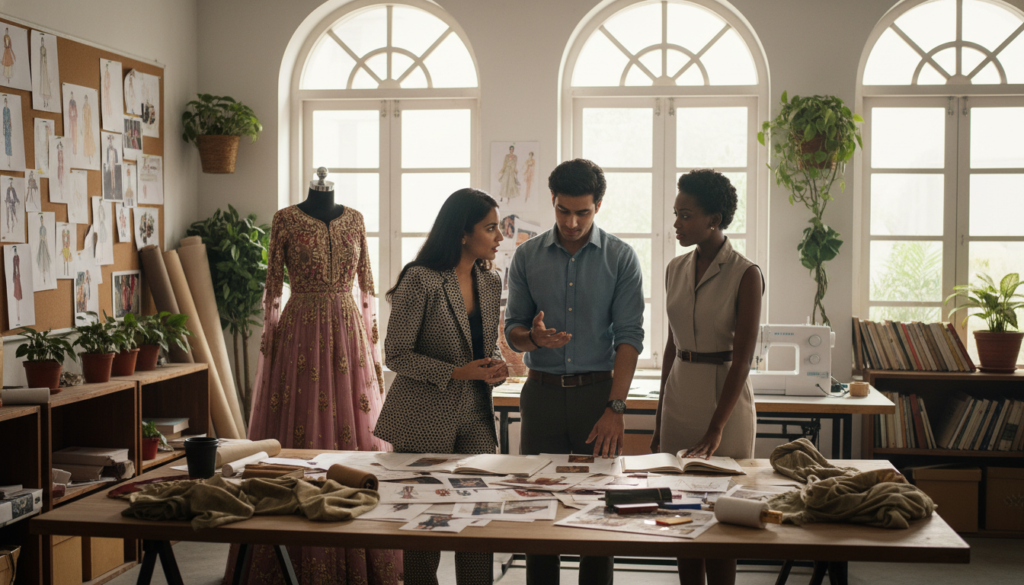
India is a manufacturing giant and a creative force globally. International brands work with Indian designers and manufacturers. Your career can go in many directions, from luxury brands to sustainable fashion startups.
The digital world has opened new paths for designers. E-commerce, social media, and virtual fashion shows have changed how you reach customers. You can build a brand from your studio and connect with buyers worldwide.
Popular Fashion Design Courses
Your education is crucial for your fashion design career. Many programs fit different career goals and time frames. Understanding these options helps you choose the right one for you.
Undergraduate degree programs are the foundation for most designers. Bachelor of Design (B.Des) in Fashion Design takes four years and covers all design aspects. Bachelor of Fine Arts (BFA) in Fashion Design is a three-year program focusing on creativity.
These programs teach design basics, textile science, garment construction, and more. You’ll also study fashion history, trend forecasting, and business management. Practical projects and internships prepare you for real-world challenges.
Postgraduate options deepen your expertise. Master of Design (M.Des) programs last two years and focus on advanced concepts. Master of Fine Arts (MFA) in Fashion Design emphasizes artistic expression and conceptual design thinking.
Diploma and certificate courses offer faster entry points into the industry. These programs last six months to two years and focus on specific skills. They’re great if you want to start working quickly or add specialized skills to your qualifications.
| Program Type | Duration | Focus Areas | Career Outcomes |
|---|---|---|---|
| B.Des Fashion Design | 4 years | Comprehensive design education, technical skills, business fundamentals | Fashion designer, stylist, merchandiser, entrepreneur |
| M.Des Fashion Design | 2 years | Specialization, research, innovation, leadership | Senior designer, creative director, design educator |
| Diploma Programs | 1-2 years | Practical skills, specific techniques, portfolio development | Assistant designer, pattern maker, fashion consultant |
| Certificate Courses | 6-12 months | Targeted skills like CAD, draping, or styling | Freelance work, skill enhancement, career transition |
Key Skills Required for Success
Success in fashion design requires technical skills and personal qualities. You need skills that can be taught and those that develop with practice and experience. Both are important for your career.
Technical competencies are your professional toolkit. Drawing and sketching let you share design ideas visually. Pattern making and draping skills turn concepts into real garments. You must know garment construction and sewing well.
Textile knowledge is key. You should know different fabric types, their properties, and how they behave. Color theory and its use in design collections require study and practice.
Proficiency in computer-aided design (CAD) software is essential. Programs like Adobe Illustrator and Photoshop help you create digital designs. Many employers require these digital skills from the start.
Soft skills are crucial for long-term success. Creativity and original thinking help you stand out. You need to know fashion trends, cultural movements, and consumer preferences to create relevant designs.
- Strong communication abilities for presenting ideas to clients and collaborating with production teams
- Business acumen including understanding costs, pricing, marketing, and brand building
- Attention to detail ensuring quality in every aspect from initial sketch to final product
- Time management skills to handle multiple projects and meet strict deadlines
- Adaptability to changing trends, technology, and market conditions
Knowing the fashion designer salary landscape helps you set realistic goals. Entry-level positions in India offer annual compensation between ₹2.5 to ₹4 lakhs. These roles include assistant designer positions, internships with stipends, and junior design roles at established brands or manufacturing units.
Mid-level designers with 3-7 years of experience earn ₹5 to ₹10 lakhs annually. Your salary depends on your employer type, specialization, and portfolio strength. Working for luxury brands, international labels, or running a successful independent label can increase your earnings.
Senior designers and creative directors with extensive experience earn more than ₹15 lakhs per year. Some reach ₹25-30 lakhs or more with premium brands or successful design houses. Freelance designers and entrepreneurs have variable income based on project volume and client base.
Geographic location affects compensation. Metro cities like Mumbai and Delhi offer higher salaries but have higher living costs. Your specialization matters too—luxury designers, costume designers for entertainment, and accessories designers often earn different amounts for comparable experience levels.
Remember, salary is just one part of career satisfaction. Creative fulfillment, work-life balance, learning opportunities, and industry recognition also matter. Many designers start with modest earnings but build wealth through brand development and entrepreneurship over time.
Choosing the Right Educational Path
Choosing from many fashion courses India can be tough. But knowing your options helps. Your education shapes your skills, network, and career start. The right program matches your dreams, budget, and timeline.
There are many paths for designers, from degrees to vocational courses. Each has its benefits, based on your goals and situation. Look at curriculum, industry connections, practical training, and support after graduation.
Renowned Institutions for Fashion Design
India has top schools for fashion design. These schools mix theory with creativity. Knowing what each school offers helps find the best fit for you.
The National Institute of Fashion Technology (NIFT) is a top government school. It has campuses in Delhi, Mumbai, Bangalore, and Kolkata. NIFT offers bachelor’s and master’s programs, needing a competitive exam.
Pearl Academy is a leading private school in Delhi, Mumbai, and Jaipur. It focuses on current fashion trends and business skills. The academy has strong industry ties for internships.
The National Institute of Design (NID) in Ahmedabad specializes in textile and apparel design. Admission is through the NID DAT, testing creative thinking. NID graduates are known for their innovative designs.
| Institution | Program Duration | Key Strength | Admission Process |
|---|---|---|---|
| NIFT | 4 years (B.Des) | Government-backed credibility and extensive alumni network | NIFT Entrance Exam with Creative Ability Test |
| Pearl Academy | 3-4 years | Industry collaborations and international exposure | Portfolio review and personal interview |
| NID | 4 years (B.Des) | Research-driven design methodology | NID DAT followed by studio test |
| Symbiosis Institute | 4 years | Multidisciplinary approach with management integration | SET (Symbiosis Entrance Test) |
Benefits of Vocational Training
Vocational training is a practical choice for designers. It focuses on hands-on skill development. It’s great for those who want to start working quickly.
Vocational training has many benefits. It’s shorter, lasting 6 months to 2 years. This means you can start earning and gaining experience sooner.
The best investment you can make is in yourself. The more you learn, the more you earn.
Vocational training is also cheaper. It has lower fees than full degree courses. This saves money while still giving you valuable skills.
Vocational programs focus on industry-relevant techniques. You’ll work on practical projects and learn from real fabrics. This makes you job-ready when you finish.
- Intensive workshop-based learning with immediate skill application
- Industry mentors who provide real-world insights and guidance
- Smaller class sizes allowing personalized attention and feedback
- Flexible scheduling options for working professionals or part-time students
- Direct pathway to entry-level positions or freelance opportunities
NIF Global Siliguri: A Leading Option
NIF Global Siliguri is a top choice in the northeastern region. It combines traditional design principles with contemporary fashion trends. This ensures you’re both creative and technically skilled.
NIF Global Siliguri has structured programs to support your career goals. The curriculum balances creativity with industry readiness. You’ll learn about sketching, draping, digital design, and fashion marketing.
The school has modern facilities and resources. Design studios, computer labs, and material libraries are available. Faculty members have both academic and industry experience.
Strong industry connections make NIF Global Siliguri stand out. These connections lead to internships and job placements. Support continues after graduation to help you find work or start your own business.
Students get personalized attention due to small class sizes. This mentorship helps you grow as a designer. Regular industry interactions and fashion shows keep you updated on market trends.
For more information on their fashion courses India, contact NIF Global Siliguri. Call +91 98326 40060 or email nifsiliguri@gmail.com. The admissions team can guide you on how their programs fit your career goals.
Choosing the right education is important. Consider your goals, resources, and circumstances. Whether it’s a degree, vocational training, or NIF Global Siliguri, make sure it supports your vision. Your education should give you knowledge, confidence, and connections to succeed in fashion.
Building Your Fashion Portfolio
In the world of fashion, your portfolio speaks louder than your resume. It shows the unique view you bring to the industry. This collection is key for starting a successful fashion design career in India and finding good jobs.
Learning to build, improve, and show your work well can change your career path. The right portfolio can lead to internships, jobs, freelance work, and starting your own fashion business in India.
Importance of a Professional Portfolio
Your portfolio is like a visual resume. It gives employers a quick look at your design style, skills, and creativity. Recruiters and design houses often choose based on your portfolio more than your grades.
A good portfolio shows you can think up ideas, make designs, and share your vision. It’s crucial for your professional identity.
The quality of your portfolio can affect your salary. Employers check if your work is worth paying you well by looking at your portfolio.
Your portfolio is not just for jobs. It helps you find freelance work, get into advanced programs, win competitions, and start your own label.
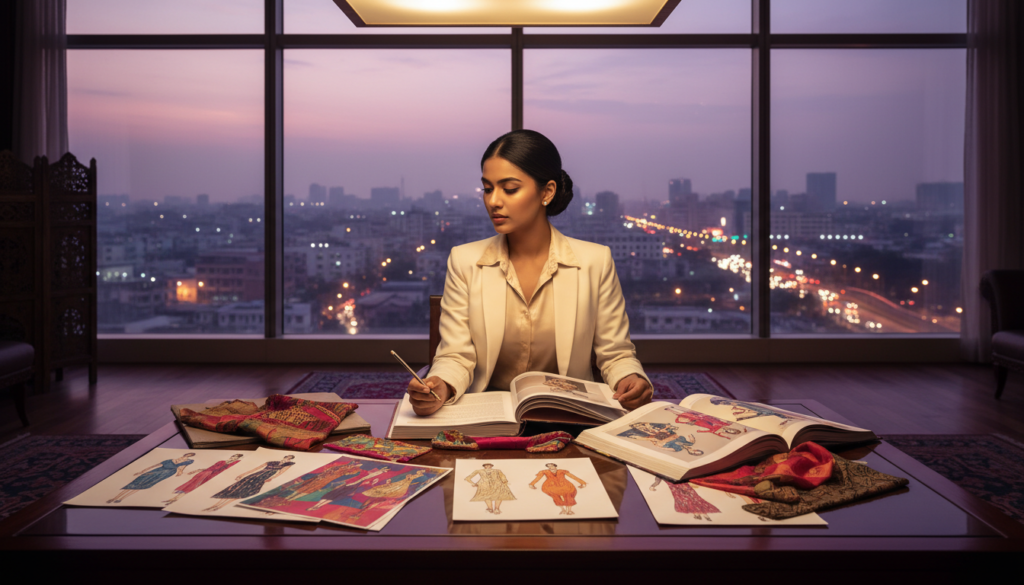
Tips for Creating an Impressive Collection
Quality is more important than quantity in your portfolio. Choose your best 15-20 pieces that show different styles and techniques.
Show every step of your design process. Include sketches, mood boards, fabric swatches, and construction details. This shows how you solve problems.
Good photography makes your work look better. Use proper lighting, styling, and composition to show your garments well.
Organize your portfolio in a way that makes sense. You can arrange pieces by theme, time, or project type. This shows your versatility.
Include different types of projects in your portfolio. This can include school work, personal projects, internship work, competition entries, and team projects. These show your skills and creativity.
- Academic coursework that shows your basic skills and knowledge
- Personal projects that show your true design style and passion
- Internship contributions that show you can work in the real world
- Competition entries that show you can work under pressure
- Collaborative work that shows you can work with others
Keep updating your portfolio to show your growth and new skills. Remove old work and add new pieces that show your latest style and skills.
| Portfolio Component | Purpose | Recommended Quantity | Impact on Opportunities |
|---|---|---|---|
| Completed Garments | Show your construction skills and design execution | 10-15 pieces | High – shows you can make things |
| Technical Drawings | Show your technical knowledge and ability to follow specifications | 8-12 detailed flats | High – very important for jobs |
| Concept Sketches | Show how you think and create | 15-20 illustrations | Medium – shows your design process |
| Textile Experiments | Show your creativity and material exploration | 5-8 samples | Medium – shows you can try new things |
| Process Documentation | Show how you solve problems and work | 3-5 complete journeys | High – employers like this |
Showcasing Your Work Online
Having a digital presence is key for fashion designers today. Online portfolios can reach people all over India and the world.
Make a professional website using platforms like Wix, Squarespace, or WordPress. Your website is your main place to show your work and brand.
Be active on visual platforms like Instagram and Pinterest. These sites let you share your work, connect with others, and find new opportunities.
Put your portfolio on sites like Behance and Coroflot. These sites attract recruiters and offer chances to meet other creatives.
Have PDF versions of your portfolio ready for emails and applications. Make sure they look good and work on all devices.
Use videos to show how your garments move and look. Short fashion films or runway shows add excitement to your portfolio.
Your online portfolio can affect how much you earn. A strong online presence builds your brand and makes you stand out in the industry.
Use the right keywords, descriptions, and branding on all platforms. This helps people find you when they search for designers like you.
Launching Your Fashion Career
Your education and portfolio are the starting points. Now, it’s time to dive into the professional world. Moving from student to working designer needs careful planning and industry involvement.
Building Professional Relationships
Go to fashion weeks, trade shows, and industry events in cities like Mumbai, Delhi, and Bangalore. Join the Fashion Design Council of India to meet professionals. Use LinkedIn to connect with designers and brands. Enter design competitions to get noticed. These steps can lead to mentorship and collaborations, boosting your career.
Securing Your First Position
Look for fashion brands that fit your style. Use job sites and your school’s placement services. Reach out to designers with your portfolio. Start with internships at big names or new startups. Roles in styling or merchandising can lead to design jobs. Real-world experience improves your skills and raises your salary.
Strategies for Long-Term Success
Keep up with global trends by learning constantly. Create your unique style while meeting market demands. Know about production costs, pricing, and retail. Build a strong online presence. Always focus on quality. Use feedback to grow. Think about specializing in sustainable fashion or bridal wear. Your career in India will grow from ₹3-4 lakhs to ₹15+ lakhs, and even more as an entrepreneur.