
Did you know that India’s apparel market is projected to reach $190 billion by 2025? This huge number shows one of the fastest-growing sectors in the world. It’s creating new career chances like never before.
The fashion industry in India has grown a lot. It now includes innovative design studios, advanced e-commerce sites, green practices, and luxury stores. This growth means more career paths than ever.
You can find a job that fits your dreams in this fast-changing field. Whether you love design, digital marketing, managing supplies, or green fashion, there are many chances to grow.
Knowing how the market is changing helps you plan your career. You’ll see how new tech, global links, and what people want are changing the industry. This info lets you choose the right path in this booming field.
Key Takeaways
- India’s apparel market is expected to reach $190 billion by 2025, creating massive employment opportunities across multiple sectors
- The sector has transformed from traditional manufacturing into a diverse ecosystem including design, e-commerce, sustainability, and luxury retail
- Career paths now span creative roles, technology integration, supply chain logistics, and sustainable fashion initiatives
- Global market connections position Indian professionals to work with international brands and emerging domestic labels
- Understanding current market trends helps you identify which specialization aligns with your skills and long-term goals
Overview of India’s Fashion Industry Growth
Exploring career options in fashion? Knowing the industry’s growth is key. India’s fashion industry has grown fast, becoming a big player globally. This growth offers many jobs in design, making, retail, marketing, and tech.
This growth is more than just numbers. It’s about blending old skills with new business ways. Now, India attracts lots of investment from local and international brands. They want to use India’s talent and making skills.
Key Growth Metrics and Statistics
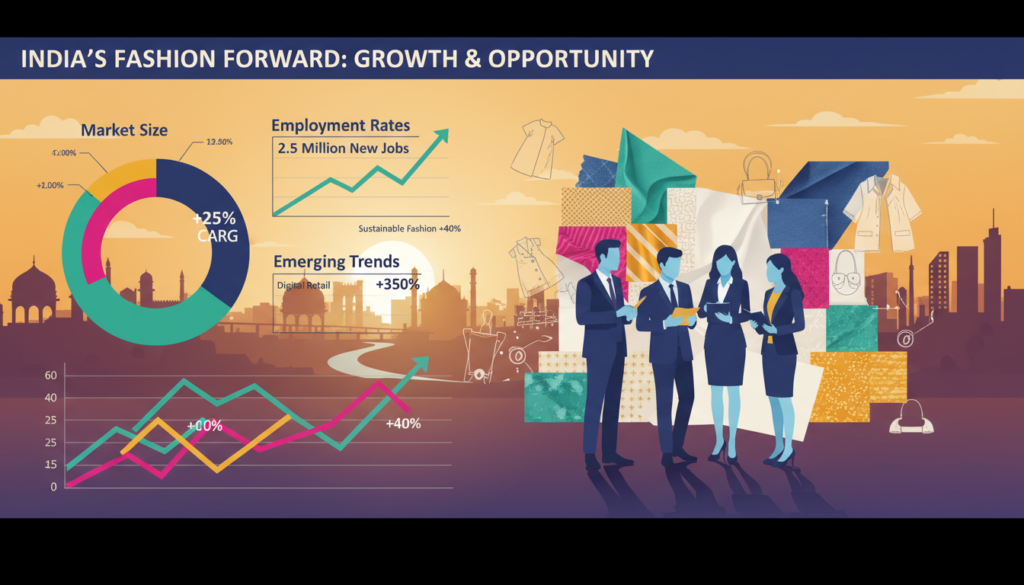
The numbers show India’s fashion industry is booming. The Indian apparel market was worth about $96 billion in 2023. It’s growing at a rate of 10-12% each year. This makes India one of the fastest-growing fashion markets.
Jobs in fashion are plentiful. Over 45 million people work directly in the sector. Many more work in related fields. Jobs range from making clothes to managing brands.
India’s fashion exports are impressive. They hit $44 billion annually. The country exports a lot to the US, EU, and Middle East.
Investors are betting on fashion. Funding for fashion startups jumped by 230% from 2020 to 2023. They’re interested in sustainable and tech-enabled fashion. Fashion is about 2.3% of India’s GDP, showing its economic value.
Major Trends Driving Growth
Several trends are changing the fashion market. Sustainable and ethical fashion is now a big deal. People want to know how clothes are made and where they come from.
Brands are focusing on eco-friendly materials and fair labor. This creates jobs for those who care about the planet and people. You might work on making clothes better for the environment.
Indian craftsmanship is meeting modern design. Designers are using old techniques like block printing and handloom weaving in new ways. This opens up jobs for those who love both old and new styles.
Online shopping is growing fast. E-commerce now makes up over 30% of all apparel sales. This change needs people who know how to sell online and make shopping easy.
- Digital marketing and social media management
- E-commerce platform optimization
- Customer experience design
- Supply chain logistics for online fulfillment
- Data analytics for personalization
More Indians are buying clothes, thanks to a growing middle class. They want good fashion at affordable prices. This demand is creating new opportunities for brands and retailers.
Indian designers are getting global recognition. They show their work at big fashion weeks in Paris, Milan, and New York. Celebrities and influencers are wearing Indian designs, boosting India’s fashion image worldwide.
Role of Technology in Transformation
Technology is changing fashion in big ways. Artificial intelligence is helping designers create faster and better. AI predicts trends, saves fabric, and makes custom designs based on what customers want.
Virtual fitting rooms and augmented reality are solving online shopping problems. They help with sizing and improve customer happiness. Fashion pros who know tech and design are in high demand.
Blockchain is making supply chains more transparent. It lets you track where materials come from. This creates jobs for blockchain experts in fashion.
Data analytics is making trend forecasting more scientific. Brands use data to guess what customers will like. Knowing how to use data in fashion is key.
Social media is crucial for brands to succeed. Platforms like Instagram are where people find new fashion. The rise of influencers has created new career paths.
With technology changing fashion, you need to be tech-savvy. The best candidates mix creativity with technical skills. This prepares them for leading roles in the future.
Emerging Career Opportunities in Fashion
The fashion world today offers more career paths than ever before. These paths include creative, technical, and business roles. The growing apparel market has created new opportunities for people with different skills and interests. Whether you’re interested in design, merchandising, or digital marketing, the fashion industry India growth has opened up new positions.
Understanding these opportunities helps you make informed career choices. Each role has its own set of skills and rewards in this dynamic field.
Diverse Professional Roles in the Fashion Sector
The modern fashion world is more than just design. There are many specialized career paths that match your talents and goals.
Fashion designers create original clothing and accessory concepts. They develop collections from start to finish. They research trends, choose fabrics, and oversee production. Entry-level designers earn between $35,000 and $50,000 a year. Experienced designers make much more.
Textile designers work on fabric patterns and textures. They create prints, weaves, and surface designs for various products.
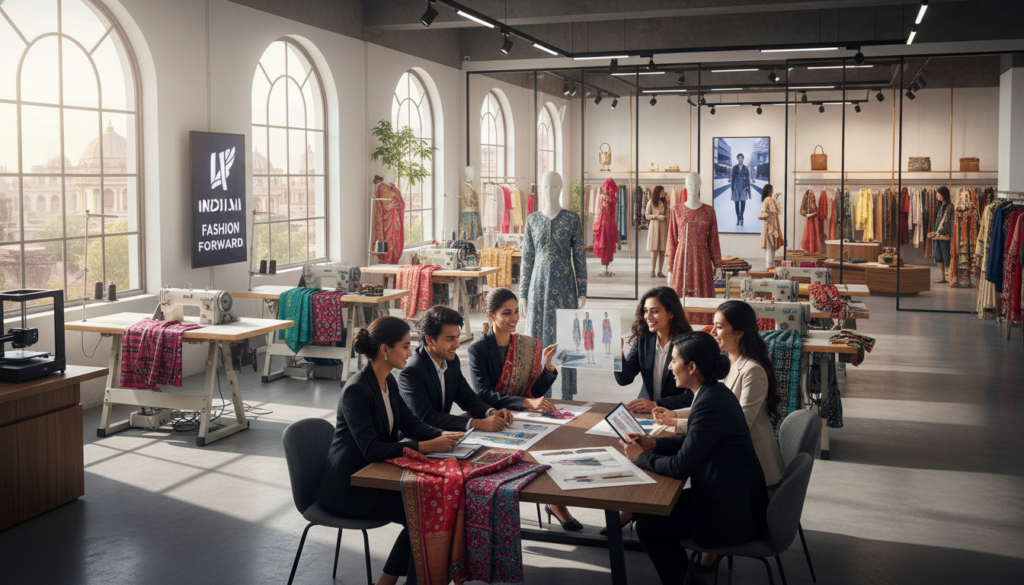
Fashion merchandisers connect creative vision with commercial success. They analyze market trends, plan product assortments, and set prices. This job needs both analytical thinking and creativity.
Retail managers run store operations. They manage staff, inventory, and customer experiences. Their goal is to meet sales targets while keeping brand standards and creating welcoming stores.
The table below shows key career paths, their main responsibilities, and growth potential:
| Career Role | Primary Focus | Skills Required | Growth Potential |
|---|---|---|---|
| Fashion Buyer | Selecting merchandise for retail | Negotiation, trend analysis, budgeting | High demand in expanding markets |
| Styling Professional | Creating looks for clients/media | Creative vision, communication, networking | Growing with digital media expansion |
| Fashion Photographer | Visual storytelling through images | Technical photography, editing, artistic eye | Strong growth in e-commerce sector |
| E-commerce Specialist | Managing online fashion platforms | Digital marketing, SEO, analytics | Rapid expansion with online retail |
Fashion journalists and bloggers share trends and insights. They write for magazines, websites, or social media. They need strong writing skills and fashion knowledge.
Costume designers create wardrobes for film, theater, and TV. Pattern makers turn designs into production-ready templates. Quality control specialists ensure products meet standards.
Additional roles include:
- Fashion illustrators create visual designs
- Fashion event managers organize shows and events
- Visual merchandisers design retail displays
- Brand managers develop and maintain brand identities
Why Formal Education Matters for Your Success
While talent is important, formal education and training are key for success in the fashion industry India growth. Education gives you technical skills to complement your creativity.
Understanding garment construction, fabric properties, color theory, and business basics is crucial. This knowledge helps you succeed in the field.
Industry certifications show your expertise to employers. They prove your commitment to professional growth. Specialized credentials in fashion technology, digital design, or sustainability are valuable.
Internships and hands-on experience are essential for preparation. They give you real-world insights and practical skills. You’ll also build industry connections and create portfolio pieces.
Specialized training sets you apart in competitive markets. Employers value candidates with focused education over those with general knowledge.
Key educational benefits include:
- Access to industry-standard equipment and software
- Mentorship from experienced faculty and visiting professionals
- Opportunities to participate in fashion shows and competitions
- Structured curriculum covering both creative and business aspects
- Professional network development through alumni connections
Educational Institutions Preparing Tomorrow’s Fashion Leaders
Choosing the right school is crucial for your career in the apparel market. Many respected institutions in India offer comprehensive programs for various fashion careers.
The National Institute of Fashion Technology (NIFT) has multiple campuses nationwide. It offers undergraduate and postgraduate programs in design, management, and technology. NIFT’s rigorous curriculum and industry partnerships prepare students well.
Pearl Academy provides innovative fashion education in major cities. Their programs focus on contemporary design and global standards. This prepares you for international careers.
Symbiosis Institute of Design combines fashion with communication and product design. This approach helps you develop versatile skills for creative industries.
Regional institutions also play a key role in fashion education. NIF Global Siliguri offers specialized programs tailored to industry needs. Their curriculum focuses on practical skills and theoretical knowledge, ensuring graduates are job-ready.
If you’re interested in fashion education, contact NIF Global Siliguri at +91 98326 40060 or nifsiliguri@gmail.com. They can provide details on programs, eligibility, and career support.
Quality fashion schools offer many advantages:
- Industry connections through partnerships with brands and manufacturers
- Portfolio development opportunities via projects and competitions
- Placement assistance connecting graduates with jobs
- Infrastructure access including design studios, fabric libraries, and technology labs
- Continuing education through workshops and professional development programs
Your school choice should match your career goals, learning style, and budget. Research programs, faculty, alumni success, and industry recognition when choosing.
Investing in quality fashion education pays off throughout your career. Graduates from top programs often get jobs faster, earn higher salaries, and advance faster than those without formal education.
Challenges and Considerations for Aspiring Fashion Professionals
Starting your career in the fashion industry in India comes with its challenges. The growing apparel market offers chances, but you need to be strategic and flexible to succeed.
Navigating Competition in the Market
To stand out, find your unique spot in the market. You could focus on sustainable fashion, traditional crafts, or tech in clothing. Create a portfolio that highlights your special talents and views.
Networking is key in the fashion world. Go to events like Lakme Fashion Week and India Fashion Forum to meet industry leaders. Use social media like Instagram and LinkedIn to share your work and find jobs or clients.
It’s important to have both creative ideas and business smarts. Knowing about supply chains, costs, and marketing will make you valuable to brands in the competitive market.
Understanding Consumer Behavior Changes
Today’s shoppers care about sustainability and fair production. Brands like Nicobar and Anita Dongre have thrived by meeting these needs. Your career should match these changing values.
People want personalized shopping experiences now. They look for custom clothes and styling services. The influence of social media and influencers also shapes what they buy.
Today’s buyers want clothes that fit everyone and see themselves in fashion. Work on skills like pattern making, adaptive design, or inclusive marketing. This way, you can meet the market’s evolving needs.