
Did you know that nearly 40% of creative professionals switch between these two fields in their first five years? This shows how similar yet different these careers are.
You’re at a big crossroads in your career. Both paths let you shape spaces and solve creative problems. But each career needs different skills, training, and ways of thinking.
Choosing between interior design and architecture isn’t just about what you like. It’s about finding the best fit for your talents. You’ll decide if you focus on the details of a room or the big picture of a building.
Both fields are in high demand in the U.S. The construction and built environment sectors are growing. This means more chances in both areas. Each career plays a unique role in how we experience our surroundings.
This guide will help you understand the main differences, education, skills, and job prospects. For formal training, places like NIF Global Siliguri (contact: +91 98326 40060, nifsiliguri@gmail.com) offer programs in these areas.
Key Takeaways
- Both professions shape how people experience spaces but through different approaches and responsibilities
- Educational pathways and licensing requirements differ significantly between the two careers
- Your natural talents and interests should guide your choice more than salary considerations alone
- The U.S. market shows growing demand for qualified professionals in both fields
- Specialized training programs provide essential foundation for either career path
- Understanding core differences helps you make an informed decision about your professional future
Understanding the Differences Between Interior Design and Architecture
Interior design and architecture both shape our living and working spaces. But they do it in different ways. Knowing the differences helps you choose the right career path.
These two fields have different scopes of work. They often work together, but each has its own set of responsibilities.
What Interior Design Involves
Interior design makes indoor spaces functional, safe, and beautiful. It focuses on the elements that make spaces comfortable and look good.
Interior designers think about how people use spaces. They pick colors that affect mood and choose furniture that’s both stylish and comfy.
They plan spaces carefully to make them work well. They think about how people move through rooms. Ergonomics is key in choosing furniture and room layouts.
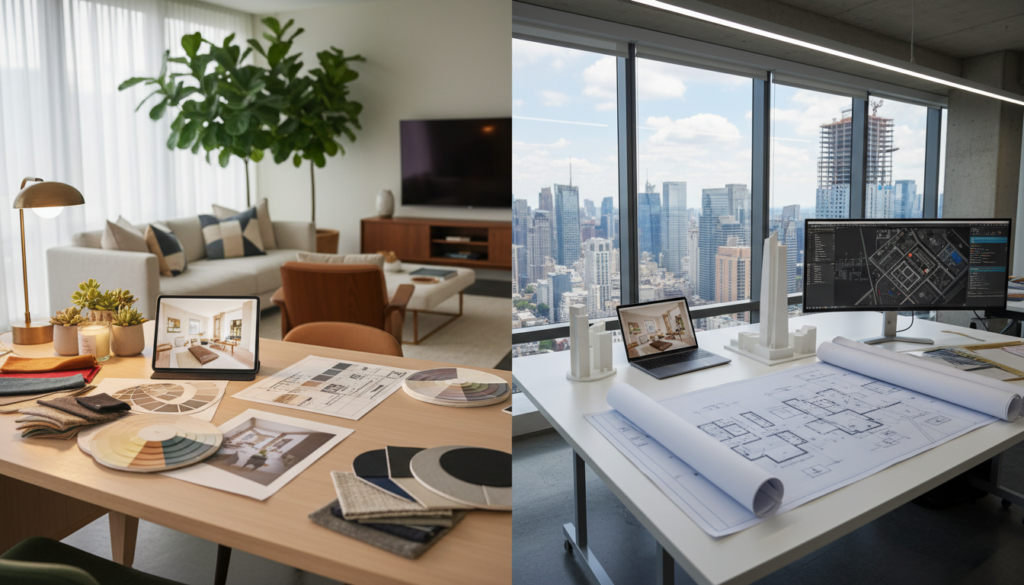
Designers also think about materials beyond how they look. They consider textures, durability, and how easy they are to clean. Lighting is a big tool for changing spaces.
Designers work with clients to understand their needs. They turn clients’ wishes into real designs. Design choices can affect how people feel.
What Architecture Encompasses
Architecture looks at the whole building, from start to finish. Architects design everything from the ground up.
Architects start with site analysis and planning. They look at the land, weather, and rules before designing. They focus on making sure buildings are safe.
Architects need to know engineering to make buildings last. They design the structure, including walls, foundations, and roofs. They follow building codes and safety rules.
Architects design the outside of buildings too. They make sure buildings look good and protect against weather. They decide on windows, doors, and materials.
They also think about how buildings fit into their surroundings. They consider how buildings affect the area around them. Sustainability is becoming more important in their work.
Comparing Professional Responsibilities
Interior design and architecture are different in many ways. These differences affect your daily work and your career.
Architects start projects early, before construction begins. They work with owners to shape the building’s idea. They stay involved until the project is done.
Interior designers join projects later, when the building’s basic design is set. They work on new buildings or renovations. They’re crucial in making spaces livable.
| Aspect | Interior Design | Architecture |
|---|---|---|
| Primary Focus | Interior functionality, aesthetics, and user experience within existing spaces | Overall building structure, exterior design, and structural systems |
| Project Timeline Entry | During finishing phases or renovation planning | Initial concept and pre-construction stages |
| Main Responsibilities | Color schemes, furniture selection, spatial planning, lighting, materials | Structural integrity, building codes, site planning, engineering coordination |
| Scope of Decisions | Comfort, functionality, aesthetic experience, psychological impact | Building safety, longevity, code compliance, environmental integration |
Architects make big decisions that affect a building’s safety and life span. A mistake can be serious.
Interior designers make choices that affect how people feel and use spaces. Their decisions are important but don’t usually affect the building’s structure.
Legal issues differ between the two fields. Architects can be held responsible for structural problems and code violations. Interior designers face liability for safety issues in finished spaces.
Collaboration is another difference. Architects work with engineers, contractors, and officials. Interior designers work with vendors, decorators, and clients.
Knowing the differences helps you choose the right career. Do you like working with existing spaces or creating new ones? Your answer will guide your career choice.
Skills and Education Required for Each Field
Before you choose a career, look at the training needed and the skills required. Interior design and architecture have different paths. Each needs unique skills and education. Knowing what you need helps you pick the right path for you.
Essential Skills for Interior Designers
Interior designers need to know about color and space. They design spaces that are both beautiful and useful. This focus on people sets interior design apart.
They also need to be good with design software. Programs like AutoCAD and SketchUp are key for making plans and 3D models. Rendering software helps show designs in a real way to clients.

Interior designers must also know about building codes. This ensures their designs are safe and follow rules. They create beautiful spaces while meeting these standards.
Good communication skills are vital. Designers work closely with clients to turn their ideas into reality. Being able to understand and share ideas is key to success.
They also need to manage projects well. This includes working with contractors and vendors. Keeping up with design trends is important too.
Attention to detail is crucial. Designers notice small things that others might miss. This skill comes from practice and learning.
Required Education for Architects
Architects need more education than interior designers. They usually get a five-year Bachelor of Architecture degree. Those with other degrees can get a Master of Architecture instead.
Architectural education covers a lot. It includes structural engineering and how buildings work. This knowledge helps architects design safe and practical buildings.
Students learn about physics, math, and architecture history. These subjects give them the knowledge to design buildings. They learn about forces, climate, and architectural history.
| Program Type | Duration | Key Focus Areas | Typical Prerequisites |
|---|---|---|---|
| Bachelor of Architecture | 5 years | Structural design, building systems, construction technology | High school diploma, strong math and science background |
| Master of Architecture | 2-3 years | Advanced design theory, specialized systems, research | Undergraduate degree in any field |
| Interior Design Degree | 4 years | Space planning, color theory, materials, CAD software | High school diploma, creative portfolio recommended |
Architectural programs focus on studio work. This hands-on approach helps develop design skills. Students present their work and get feedback.
Certifications and Licenses for Both Careers
Credentials differ between interior design and architecture. Architects need a license due to their role in building safety. Knowing this helps plan your career path.
Architects must pass the Architect Registration Examination (ARE) to get licensed. They also need to complete the Architectural Experience Program (AXP). This requires about three years of experience.
Interior designers have different requirements. While not all states require a license, many get the National Council for Interior Design Qualification (NCIDQ) certification. This certification shows they are skilled and can work independently.
Some states require interior designers to be licensed for certain tasks. It’s important to check your state’s rules early on. These rules vary a lot.
For quality education, places like NIF Global Siliguri offer programs in design and architecture. You can contact them at +91 98326 40060 or nifsiliguri@gmail.com. Their programs help prepare for professional certification.
The time it takes to get certified is different for each career. Architects take seven to ten years. Interior designers may start sooner, but getting NCIDQ certification adds to this time.
Choosing your education path requires understanding these time commitments. Both paths require a lot of time and effort. The right choice affects your career and earnings for years.
Career Opportunities and Job Outlook
Understanding the professional landscape is key when choosing between interior design and architecture. Both offer rewarding paths with growth and specialization opportunities.
Job Prospects for Interior Designers
Interior designers have many options across industries. You can work in residential, commercial, or hospitality design. Many find success in healthcare or sustainable design.
The field is flexible. You might work in retail or as an independent consultant. Corporate settings offer chances to design spaces that improve wellness and productivity.
Career Paths in Architecture
Architecture firms vary from small to large. You can specialize in different areas like residential or commercial. Some focus on sustainable design or historic preservation.
Your career can grow from intern to project manager or principal. Advanced roles include construction management or teaching at universities.
Salary Expectations and Growth Projections
The U.S. Bureau of Labor Statistics says interior designers earn about $60,340 a year. Architects make around $82,840. Salaries vary by experience, location, and specialization.
Starting salaries are lower, but they increase with experience. High-end designers and architects earn more. Both fields see steady growth due to construction and investment in design.